
Get ready for the upcoming #HERDanceParty! Join the party and help us create awareness for HG and the HER Foundation. Share your own dance videos with #HERDanceParty, and let’s create a wave…

HER’s HG experts answer common questions Do you want to learn more about hyperemesis gravidarum (HG)? HER’s HG experts are here to clarify the conversation surrounding hyperemesis and clear up misconceptions. How…
World Maternal Mental Health Day World Mental Health Day is observed on the first Wednesday in May each year. This year, this theme is all about supporting each other through…

Join the #HERDanceParty! Dance, Invite, and Donate to improve HG care through research and education.
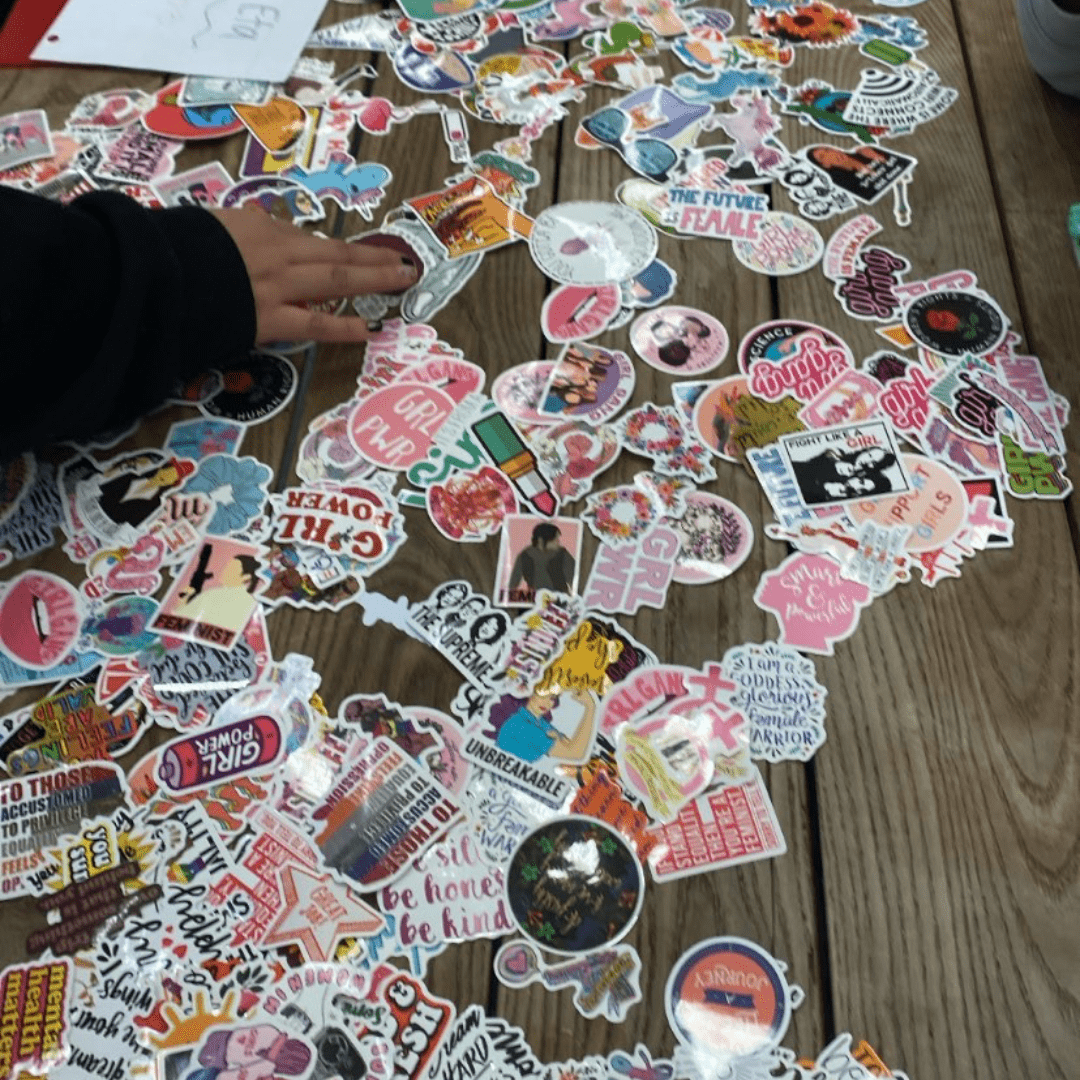
The Zeta Omega Eta sorority of the University of Michigan recently hosted a sticker sale on campus to benefit the HER Foundation, and the fundraiser was a huge success!
April 2, 2022, is World Autism Awareness Day. At the HER Foundation, we light up kindness and wear blue in support of understanding and acceptance for people with autism. Children born after an HG pregnancy have an increased risk of an autism diagnosis, and we are grateful for each of these children.

I knew nearly nothing about hyperemesis, even after my ER diagnosis. The HER website helped educate me about symptoms and how to approach medical professionals. HER helped alleviate some concerns about medications.

Overall, this study contributes to our understanding of the biology of nausea and vomiting in pregnancy and may lead to future research evaluating new treatment avenues. Of note, drugs targeting the GDF15 pathway have shown great promise in mitigating weight loss, loss of appetite, and vomiting in animal models and are currently in clinical trials in cancer cachexia, a disease with similar symptoms to HG.

Hyperemesis Gravidarum (HG) is not self-limiting, and its impact can last a lifetime for mothers and their children. Until there is recognition of this fact and comprehensive, universal, effective treatment for all HG patients, every level of society will continue to face the costs of HG.
