Weight Loss
Weight loss is influenced in part by genetics, and occurs in most cases of HG unless effective medications and nutritional support are offered early in pregnancy. Weight loss may be rapid until the mother becomes emaciated and her metabolism slows. The more weight a mother loses, the greater the risks to her and her child, and the longer her recovery.
Swelling (Edema)
Edema may develop in some patients due to fluid shifts, low protein intake and refeeding syndrome. Monitor weight changes often until patients are asymptomatic and stable.
Weight Loss Calculator
Calculate your Percent Weight Change by entering your usual weight and actual (current) weight below.
NOTE: These scales are based on non-pregnant subjects.
* Percent Weight Change = [(Usual Weight - Actual Weight) ÷ (Usual Weight)] x 100
Is her weight loss severe?
No research has established weight loss amounts that are safe during pregnancy. Our research finds that there is significant risk to the baby’s long-term health when a woman’s weight loss exceeds 15% of her pre-pregnancy weight.
Other factors need consideration such as the pre-pregnancy weight, which if low, puts mother and baby at greater risk by weight loss. Conversely, a mother who is overweight prior to pregnancy may be able to lose a little more weight without significant risk, provided she gets adequate essential nutrients like vitamins B1, folic acid, and vitamin K.
According to ASPEN, for non-pregnant women, severe weight loss is >2% in a week or >5% in a month. Severe malnutrition is less than 50% of you needed dietary intake for over a week. Pregnancy is an accelerated state of starvation so women likely qualify sooner. Many women with HG would easily be considered malnourished and should be screened carefully and given nutritional intervention.
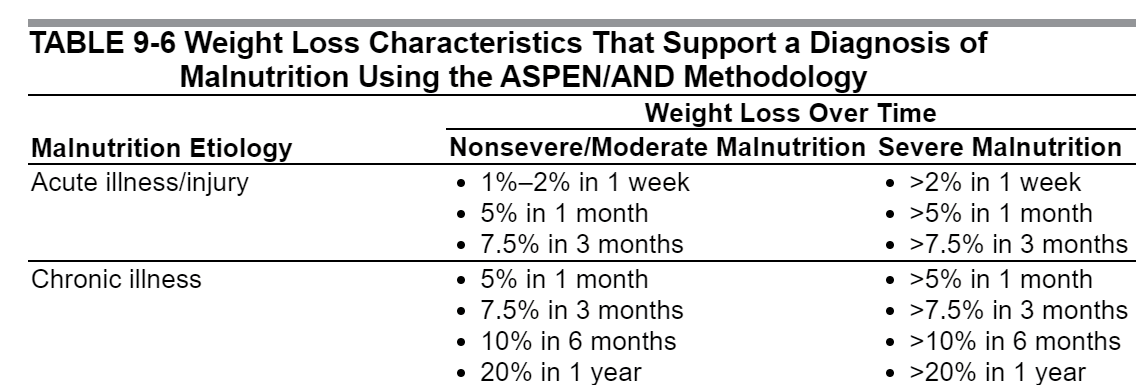
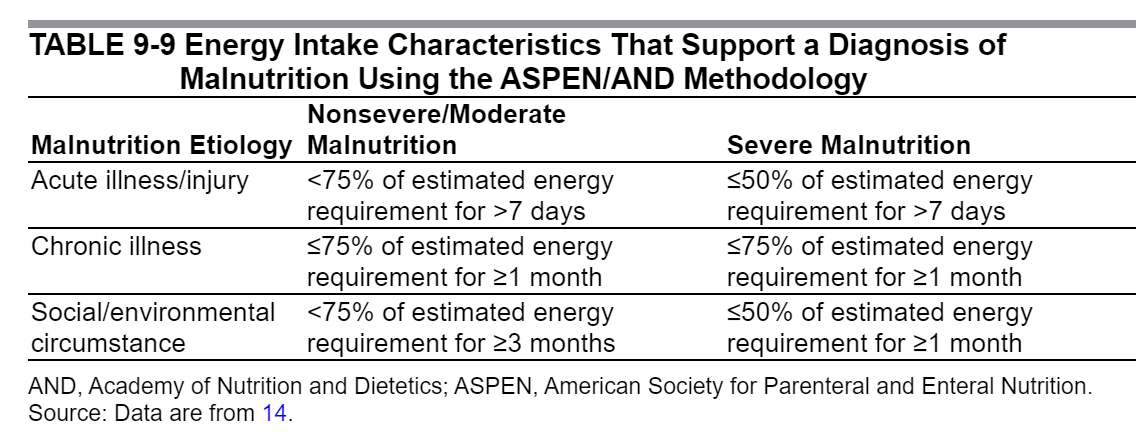
White JV, Guenter P, Jensen G, et al. Consensus statement: Academy of Nutrition and Dietetics and American Society for Parenteral and Enteral Nutrition: characteristics recommended for the identification and documentation of adult malnutrition (undernutrition). JPEN J Parenter Enteral Nutr. 2012;36(3):275–283. FROM-Adult Nutrition Support Core Curriculum, Third Edition, 9. Malnutrition Screening and Assessment
Refeeding Syndrome
Patients at Risk for Refeeding Syndrome
- Poor nutritional intake
- Weight loss >15%
- Prolonged IV hydration
- Significant stress
- Electrolyte & nutrient depletion