How sick am I?
Nausea and vomiting in pregnancy (NVP) is on a spectrum from morning sickness on one end to hyperemesis gravidarum (HG) on the other. Unlike those with morning sickness, people with HG generally have inadequate food or fluid much of the time and cannot do many of their normal activities most days.
Take our quick quiz to trend changes in your symptoms. This tool is not intended to diagnose HG. Check out our resources and contact us for a more assistance in managing your symptoms. We are here for you!
UNDERSTANDING THE SCORE
HG is not severe morning sickness but a separate diagnosis which requires medical care to avoid progressing to the next level of severity. Every person with HG suffers greatly and often is unable to do their normal activities and struggles to eat and drink. Compassionate support, both practical and medical, is critical no matter how mild or severe HG is.
Mild HG symptoms implies that a patient is very unwell, unable to eat a normal amount, and struggling to function but may be able to do some activities. Support and medical care may prevent progression to more severe symptoms.
Moderate HG symptoms implies that a patient is unable to eat/drink normally or do most of their usual activities. They may be unable to care for their family and even themselves and require extra rest. Complications affecting both mother and child may occur if not adequately treated. Coping is difficult and mental health support is likely needed to reduce trauma. Aggressive intervention is needed for moderate to severe cases, including vitamin supplementation, especially B1.
Severe HG symptoms pose a risk of serious complications for mother and child, especially if malnutrition continues beyond the first trimester. Exhaustion is universal, and the patient may be unable to even care for themselves. Rest is critical to avoid worsening HG. Depression, anxiety, and trauma are extremely common.
Postpartum complications are more likely to develop as symptom severity increases and when symptoms are prolonged or uncontrolled.
HELP (HyperEmesis Level Prediction) Score
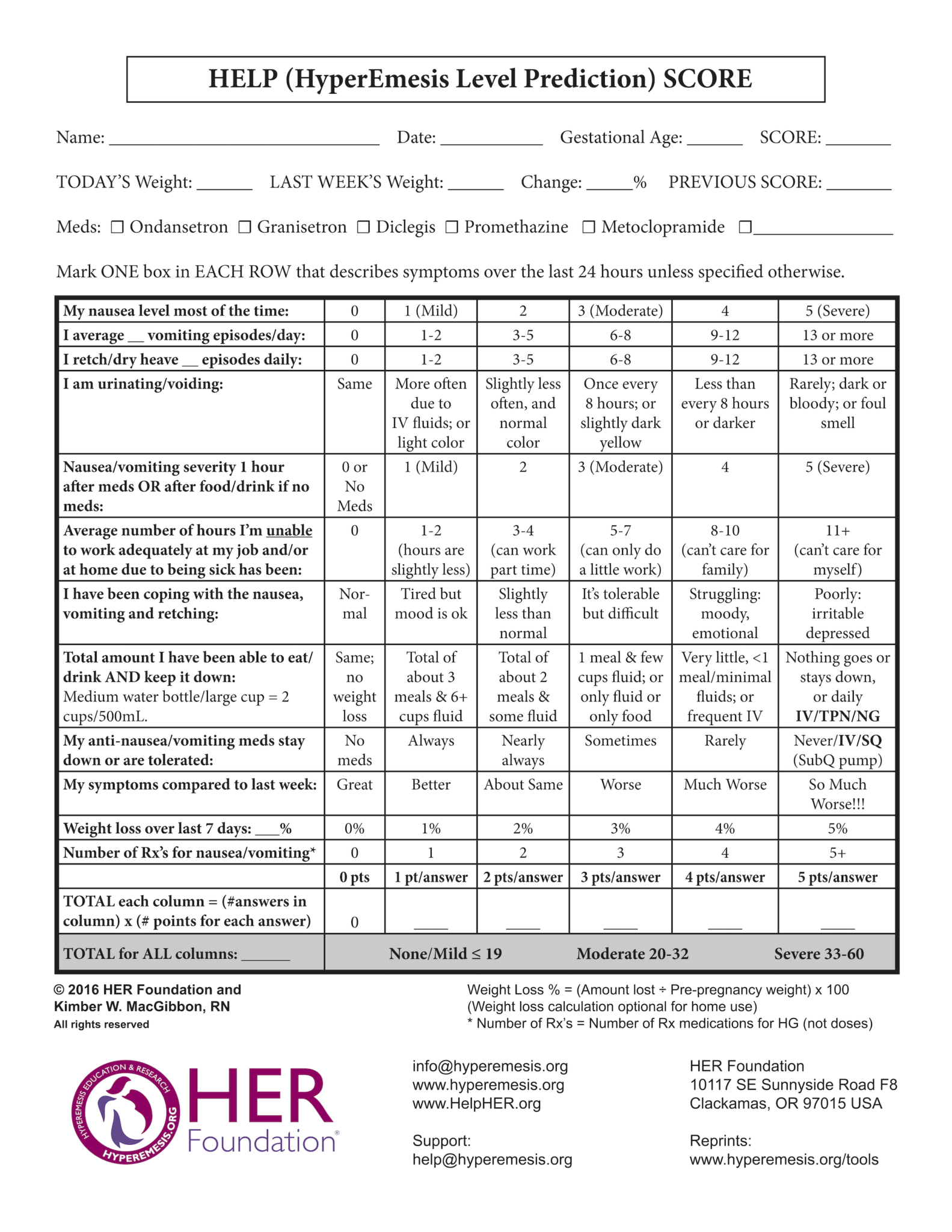
The HyperEmesis Level Prediction Score was developed by the HER Foundation to quantify HG symptoms into a score that can be trended over time to monitor progress and response to treatment.
Most answers apply to symptoms over the last 24 hours. To score this tool, give 0 points for anything in the first answer column, 1 point for answers in the next column (mild), 2 points for answers in the next column, then 3 for the next column, then 4, and then the far right column (severe) gets 5 points per answer. If printed, clinicians can focus on the right hand columns to evaluate the most concerning symptoms.
Note: Adding the percentage (%) of weight lost over the last 7 days helps improve scoring accuracy but scores are usually very accurate without this answer.
Number of Rx's asks for the number of medications (not doses) given for nausea/vomiting. This includes reflux medications given for nausea, TPN nutritional therapy, nausea/vomiting medications, and IV fluids. It also improves the accuracy of the scoring, especially for patients with more complex treatment. So if a patient is on ondansetron, IV fluids, and promethazine, the answer would be 3 and they would get 3 points.
- Scores below 20 suggest either no HG (morning sickness) or mild HG.
- Scores between 20 - 32 indicate symptoms are in the moderate range.
- Scores between 33 - 60 indicate severe symptoms that need aggressive care.